Flood Damage Restoration Garland TX and Storm Damage Repair
Extract. Dry. Document.Flood damage restoration Garland homeowners and businesses can call at any hour: when rising water, a storm-damaged roof or a flash flood gets in, Garland Restore extracts standing water, dries the structure and documents the loss so you have what you need for an insurance claim. Technicians are trained to the ANSI/IICRC S500 water damage standard.
Serving Garland and the surrounding communities of Plano, Richardson, Mesquite, Rockwall and Rowlett.
If you are in the middle of a flood or storm right now
If floodwater is rising around your home or on the road, do not drive or walk through it. The National Weather Service says as little as 6 inches of fast-moving water can knock over an adult, and 12 inches of rushing water can carry away most cars.
If you are inside a home with rising water, move people, pets and anything irreplaceable to higher ground, and get out if the water keeps rising. Call 911 for a life-threatening situation before calling a restoration company.
Once everyone is safe, if it is safe to re-enter
- Turn off electricity to affected areas at the breaker, but only if you can do it without stepping in water.
- Photograph or video the damage before you move or discard anything. Your insurer will ask for this.
- Do not throw away damaged belongings until your adjuster has seen them or told you it is fine to do so.
- Avoid contact with standing water that came from outside the home (a creek, storm drain or street) until it has been assessed. It is often contaminated.
- If you smell natural gas, leave and call your gas utility before doing anything else.
What kind of water damage is this, exactly?
The source of the water changes what has to happen next, what your insurance is likely to cover, and sometimes what the City requires before you can rebuild. Three different situations all get called flood damage or storm damage, and they are not the same. Good flood damage restoration Garland work starts by sorting out which one you have.
Rising surface water
A creek overflowing its banks, or street or yard flooding that enters the home from outside.
Generally a flood insurance matter, separate from a standard homeowners policy, and the scenario Garland’s floodplain rules are written around.
Storm-created rain intrusion
Wind-driven rain coming in through a roof damaged by hail or wind, a broken window or a compromised roofline.
Typically part of a wind or storm claim on your existing homeowners policy, not a flood claim, because the water followed damage the storm itself caused.
Indoor water during a storm
A sump pump failing in heavy rain, or a plumbing line backing up under storm-driven street flooding.
Closer to ordinary water damage or sewer backup, which has its own coverage rules and often needs a specific backup or overflow endorsement.
Is this water safe? Understanding water categories
Not all water in your home after a storm or flood is treated the same way, and it is not automatically the worst category just because the weather caused it. The ANSI/IICRC S500 standard, the restoration industry’s reference for water damage response, groups water intrusion into three categories.
| Category | What it means | Typical storm and flood examples |
|---|---|---|
| Category 1 | Clean water from a sanitary source | A supply line break, or a fresh roof leak before the water has contacted contaminated materials |
| Category 2 | Water with a significant contamination level (“gray water”) | Water that has been sitting for a period of time, or has picked up contaminants from building materials or its path |
| Category 3 | Grossly contaminated water that can carry bacteria and other hazards (“black water”) | Rising creek or floodwater, sewer backup, water that has been in contact with soil or ground contamination |
IICRC’s published position on weather-related events is more precise than the common shorthand: top-down water ingress, wind-driven rain and water from weather events are not automatically Category 3. Classification depends on what the water has actually contacted and how long it has been sitting, evaluated on site rather than assumed from the source alone.
In practice, a fresh rain intrusion through storm damage is often treated differently than rising creek water that has been sitting outside and picking up ground contamination. Rain is not automatically clean either, since it can pick up contamination as it passes through attic insulation, ceiling materials or a dirty roof assembly. If you are dealing with rising floodwater from outside the home, from a creek, storm drain or street, it is reasonable to treat it as contaminated and avoid direct contact until it has been assessed.
Sources: IICRC weather-related water damage position · IICRC S500
Flood damage restoration Garland TX: how the response works
Every water loss is different, but a flood or storm-water response generally follows this sequence.
- 01
Assessment
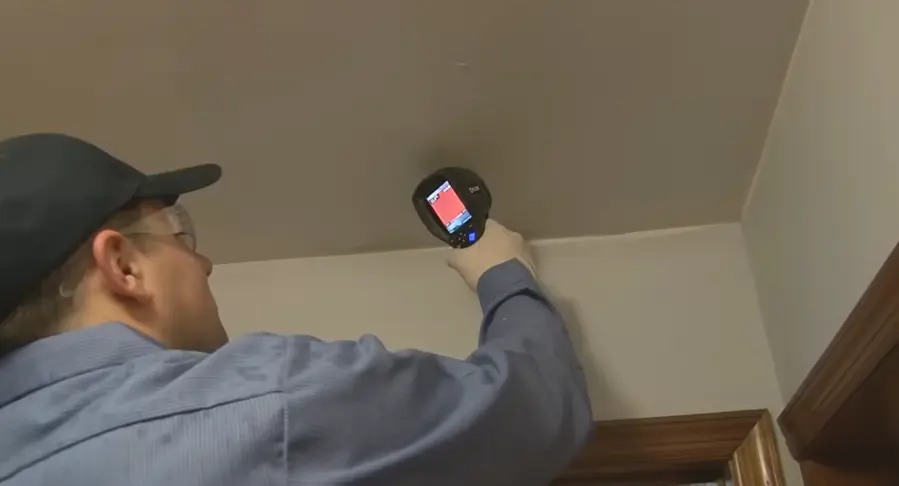
Identify the water source and category, check for safety hazards (electrical, structural, contamination), and map which areas and materials are affected, including inside walls and under flooring, not just what is visibly wet.
- 02
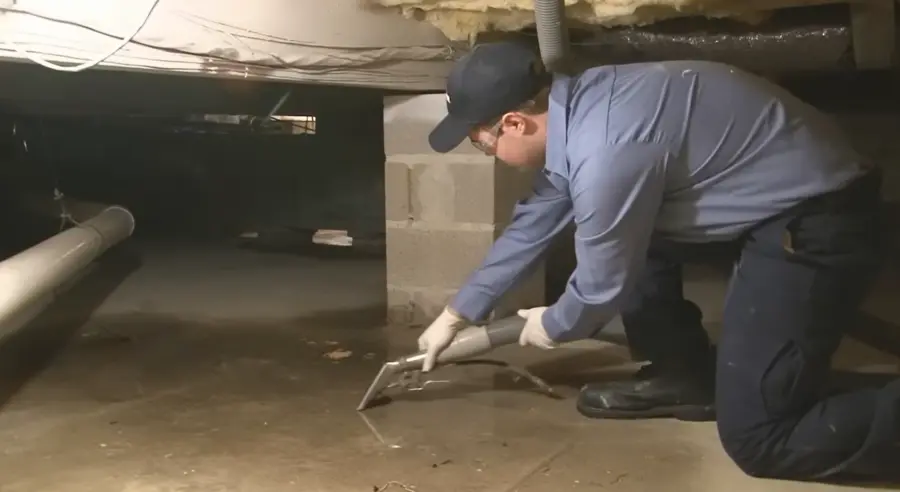
Water extraction
Standing water is removed with pumps and extraction equipment. The longer water sits, the more materials it affects, which is why extraction happens first. For more detail, see Water Extraction in Garland, TX.
- 03
Structural drying and dehumidification
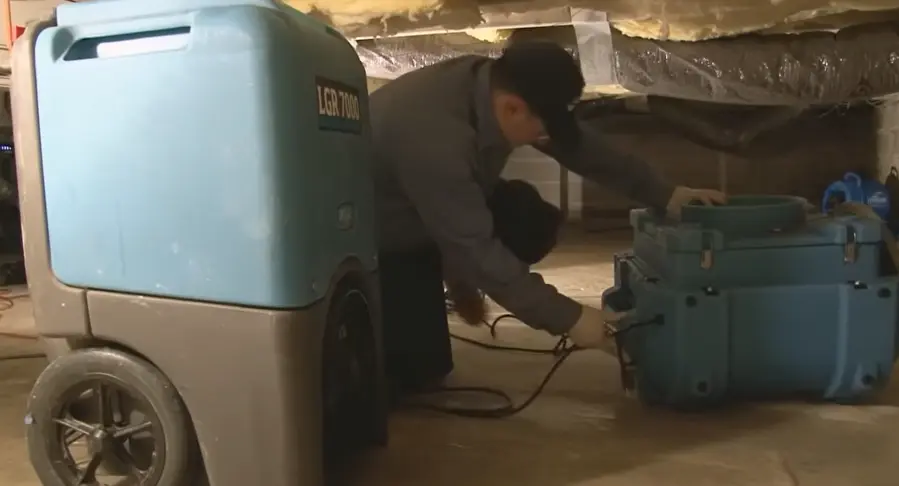
Air movers and dehumidifiers are set to dry the structure itself, not just the visible surface. Moisture readings track progress in walls, subfloor and framing, since materials can look dry on the surface while still holding moisture underneath.
- 04
Cleaning and decontamination
Where water was contaminated (Category 2 or 3), affected materials and surfaces are cleaned and treated as part of the drying process, not as an optional add-on.
- 05
Material decisions
Once the structure is dry, a decision is made on what can be dried and restored in place versus what needs to be removed. It is one of the most common points of homeowner frustration, so it is explained in more detail below.
- 06
Documentation
Photos, moisture readings and a written scope of the work support your insurance claim throughout the process, not just at the end.
Can my drywall, flooring and belongings be saved?
This is usually the first question people ask. The honest answer is that it depends on the water category and how long the material was wet, not on a blanket rule in either direction.
Drywall
What happens depends on what the water was and how long the wall stayed wet.
- Cleaner water (Category 1), caught early: can sometimes be dried in place if the wall assembly stays structurally intact and moisture readings confirm it.
- Category 2: judged case by case, based on what the water contacted, how long it sat and how the material is holding up.
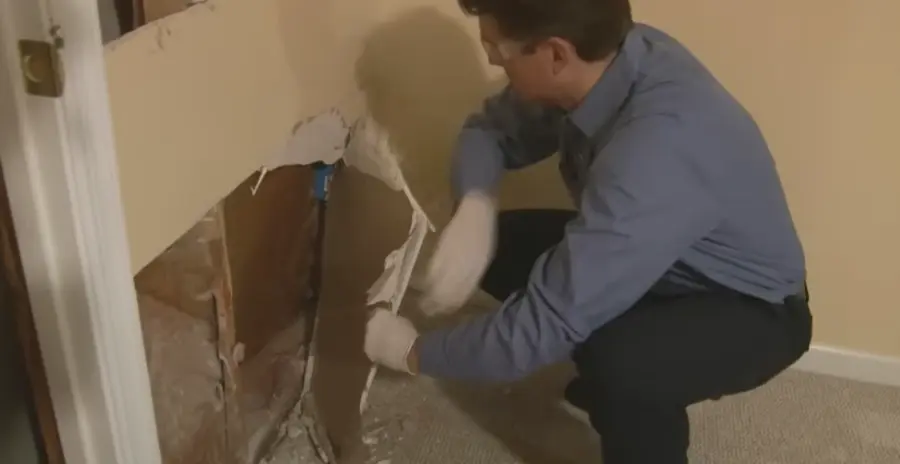
- Sewage or contaminated floodwater: drywall and insulation that absorbed it is generally removed. CDC flood-cleanup guidance says to remove and discard drywall and insulation contaminated with sewage or floodwater.
When drywall does come out, the cut is made above the waterline, not just where it looks stained. A competent assessment, not a default “tear it all out” policy, should decide this.
Flooring and subfloor
The visible floor finish is not the whole story. Water travels under flooring and into the subfloor, and the subfloor’s condition, not just the surface material, often determines whether flooring can be saved. Hardwood can sometimes be dried and refinished if caught early. It depends heavily on how long it sat wet and what the water contained.
Insulation
Wet insulation, especially saturated fiberglass batt, typically loses its effectiveness and needs replacement rather than drying in place.
Belongings and contents
What is salvageable depends on the item, the water category and how quickly it was addressed. Document everything with photos before anything is discarded, since this affects your insurance claim regardless of what ultimately happens to the item.
Source: CDC, cleaning safely after a disaster
HVAC systems after a flood or storm
If your HVAC system, ductwork or equipment was in contact with floodwater or sat in a flooded space, it needs to be assessed rather than assumed. ANSI/IICRC S590 provides the framework restoration professionals use to evaluate HVAC systems after water intrusion. It distinguishes components that were actually impacted from those that were not, and it looks at what is restorable rather than treating every flood as an automatic full duct replacement.
If your system was running with its intake near the affected area, or floodwater reached the equipment directly, that assessment matters for both air quality and cost.
Source: IICRC S590
Mold risk after a flood
Wet building materials and contents that are not dried promptly create conditions where mold can develop. EPA guidance is to dry wet materials within roughly 24 to 48 hours to help prevent mold growth. That window is a drying target, not a guarantee that mold begins at a specific hour, and it is not a fixed universal timeline.
How quickly mold becomes a real risk depends on the material, humidity, temperature and how completely the space is dried. That is why fast extraction and real structural drying, not just surface mopping, matter more than the clock alone.
If drying was delayed or materials stayed wet, mold growth is a real possibility that needs its own assessment. See Mold Remediation Garland, TX for what that process involves.
Storm damage repair Garland TX: wind, hail, tornado and debris
Garland sits in a part of North Texas that sees serious severe weather, and it shows up in how storm damage arrives here: as a roof or window problem first, then as a water problem.
On December 26, 2015, an EF4 tornado struck Sunnyvale, Garland and Rowlett. The National Weather Service records 10 fatalities from that tornado, 9 in Garland and 1 in Rowlett. It is a local reference point for how quickly wind damage can turn into a water and structural problem at the same time. Not because it happens every year, but because it shows what wind-driven rain intrusion at scale looks like.
Source: NWS Fort Worth, December 26, 2015 tornado outbreak
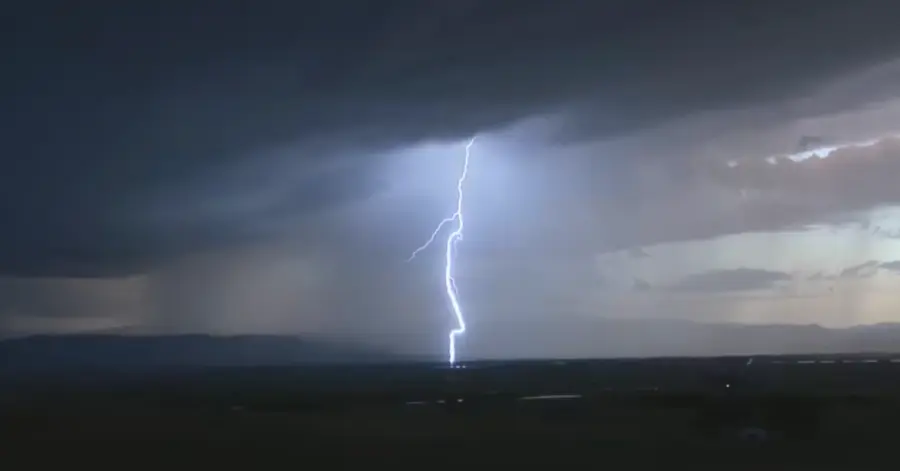
Common storm scenarios that lead to water intrusion
- Wind or hail damage to roofing that lets rain into the attic and interior during and after the storm.
- Downed trees and limbs that damage roofing, siding or windows and create an opening for water.
- Temporary protection needs: covering a damaged roof section or a broken window to stop ongoing water intrusion until permanent repairs happen.
- Debris removal, where storm debris on the property needs to be cleared as part of making the property safe.
Where wind or hail has created an opening in the building envelope, stopping the ongoing water intrusion is often the most time-sensitive part of the response, separate from the water cleanup itself.
Garland Restore’s role starts with the water: extraction, drying and documentation. Roofing repair and reconstruction are typically handled by contractors who specialize in that work, so ask what any company is actually licensed and equipped to do before agreeing to hire it.
Garland’s flood-prone areas and what the City requires
According to the City of Garland’s Floodplain and Drainage page, FEMA’s flood maps show approximately 2,400 acres of 100-year floodplain, primarily along Duck Creek, Rowlett Creek, Spring Creek and their tributaries. A “100-year floodplain” does not mean a flood happens once a century. It means the area has at least a 1% chance of flooding in any given year, which is why lenders commonly require flood insurance for properties in these areas.
Garland participates in FEMA’s National Flood Insurance Program (NFIP), which is what makes federally backed flood insurance available to property owners in the city.
If your property is in a mapped flood hazard area and was substantially damaged by flooding, Garland’s flood damage prevention ordinance matters directly. Under the City’s code, “substantial damage” means the cost of restoring the structure to its before-damaged condition would equal or exceed 50 percent of the structure’s market value before the damage occurred. The ordinance requires a development permit, and it requires the lowest floor of new residential construction and substantial improvements to be elevated two feet above the base flood elevation. Substantially damaged structures are generally held to that standard when rebuilt, so confirm the requirement for your specific address with the City.
This is not something a restoration company decides. It is determined by the City based on the scope of damage and repair cost, so if your loss is significant, raise it with Garland’s Engineering or Building Inspection department early, before repair work is planned.
Garland’s Stormwater Management program handles drainage systems and localized flooding issues separate from the floodplain itself. If you are dealing with a street drainage problem rather than (or in addition to) interior flood damage, that is the right place to report it to the City.
Sources: City of Garland, Floodplain & Drainage · Garland flood damage prevention ordinance · City of Garland, Stormwater Management
Insurance: what is actually covered
This is where the most confusion happens, so here it is directly rather than as a blanket claim either way. Exact coverage always depends on your specific policy.
| What happened | Typically handled under |
|---|---|
| Rising water from a creek, street flooding or general flooding | A separate NFIP or private flood policy, not your standard homeowners policy. This is true even if a storm caused the flooding. |
| Wind and hail damage | Your standard homeowners policy, subject to its terms and any wind or hail deductible it carries. |
| Rain entering through storm-caused damage, such as a hole in the roof | Generally part of the wind or storm claim on your homeowners policy rather than a flood claim, since the water followed damage the storm caused. |
| Sump pump failure or sewer and drain backup | Often requires a specific water backup or overflow endorsement. Check your policy. |
Texas does have a separate windstorm insurance program, the Texas Windstorm Insurance Association (TWIA), but it only applies to designated coastal counties and part of Harris County. Dallas County, and Garland with it, is not in TWIA’s coverage area, so wind and hail coverage here comes through your regular homeowners policy.
If you have an NFIP flood policy and experience a flood, report the loss to your insurer or agent promptly. Reporting the claim and filing the Proof of Loss are two different steps: the Proof of Loss, the signed statement documenting your loss, is generally due within 60 days of the date of loss unless FEMA extends that deadline. Photograph and video all damage before discarding anything, and do not throw away damaged property until your adjuster has documented it. Even a coverage denial letter can matter, since it may be needed to apply for assistance after a federally declared disaster.
The Texas Department of Insurance Help Line (800-252-3439) can help if you are having trouble reaching your insurer or understanding your policy.
Garland Restore provides photos, moisture readings, scopes, estimates and other technical documentation related to its restoration work, and can provide that information to your insurer or adjuster when requested. Coverage decisions remain between you and your insurance company.
For a closer look at claim deadlines, appraisal rights and documentation standards under Texas law, see Water Damage Restoration Insurance Garland, Texas.
Sources: Texas Department of Insurance, flood insurance · FEMA, Proof of Loss within 60 days · FloodSmart (NFIP) · TWIA coverage eligibility
Watch for storm-chaser contractors
After any significant hail or wind event, out-of-town contractors commonly move through North Texas neighborhoods offering fast roof and storm repairs. Some are legitimate. Some are not, and the Texas Department of Insurance publishes specific warning signs worth knowing before you sign anything.
- A contractor asking you to sign an agreement before giving you a written estimate.
- Requests for a large deposit or full payment upfront. After a disaster declaration, Texas law bars contractors from outside your area from asking for payment before they start work.
- A contract with blank sections that could be filled in later.
- Contract language committing you to give the contractor everything your insurer pays.
- An offer to waive or absorb your insurance deductible into the bid, which is illegal in Texas.
- Defective or lower-quality materials used on the job.
TDI’s guidance is straightforward: get bids in writing, use local companies when you can, check references, and never pay the full amount upfront. If you suspect fraud, TDI’s Fraud Unit can be reached at FraudUnit@tdi.texas.gov or 800-252-3439.
Source: Texas Department of Insurance, storm contractor fraud resources
Commercial buildings, sewage backups and cost
Commercial storm damage restoration in Garland, TX
Flooding and storm damage in a commercial building carry business downtime on top of the property loss. The source distinctions above (rising water, storm-driven rain, interior plumbing) apply the same way to commercial property, and Garland Restore provides commercial restoration alongside residential service.
Commercial Water Damage Restoration Garland, TX covers causes like sprinkler failures, roof and drainage failures and business continuity.
Sewage backup and contaminated water
If floodwater or storm-driven street flooding has caused a sewage backup into your property, that water is treated as Category 3 (contaminated) and handled accordingly.
For dedicated information, see Sewage Cleanup Garland, TX.
Cost and timeline
Cost and timeline depend on the water category, how much square footage was affected, how long the water sat before extraction started, and whether the loss required material removal or stayed at the drying stage. Category 3 flooding, or losses large enough to trigger Garland’s substantial-damage threshold, generally cost more and take longer than a smaller clean-water intrusion caught early.
For general ranges and what drives them, see Water Damage Restoration Cost Garland, TX.
A local team that starts with the water
Garland Restore technicians are trained to the ANSI/IICRC S500 water damage restoration standard. The company is licensed and insured in Texas, works with major insurance carriers and offers direct billing where available. Service covers Garland and the surrounding communities of Plano, Richardson, Mesquite, Rockwall and Rowlett, with 24/7 emergency response.
For a broader look at how a loss is handled from the first call through final drying, see our overview of water damage restoration in Garland, TX.
Frequently Asked Questions
What’s the difference between flood damage and regular water damage in Garland?
Flood damage means water entering from outside the home, such as a creek overflowing or street flooding, and it is a separate insurance category from water damage caused by something inside the home, like a burst pipe or appliance failure. Both need extraction and drying, but the insurance path and, in some cases, the contamination level of the water are different.
Does homeowners insurance cover flood damage in Texas?
Not rising floodwater from outside the home. That requires separate flood insurance, typically through the National Flood Insurance Program or a private flood policy. Your homeowners policy generally still covers wind and hail damage, and often covers rain that gets in through storm-caused damage like a hole in the roof, subject to your specific policy.
Is Garland, TX in a flood zone?
Parts of it are. The City of Garland reports approximately 2,400 acres of FEMA-mapped 100-year floodplain, concentrated along Duck Creek, Rowlett Creek, Spring Creek and their tributaries. Whether a specific property is in a mapped flood zone depends on its exact location, and the City’s Floodplain and Drainage office can confirm it for an individual address.
Is all floodwater considered black water?
Not automatically. Water is classified by what it has actually contacted, not just where it came from. Rising creek or floodwater that has been in contact with soil, storm drains or standing outdoors is generally treated as contaminated (Category 3) because of the real contamination risk. Wind-driven rain coming in through a fresh opening, like storm damage to a roof, is assessed on site rather than assumed to be Category 3.
How long does flood damage restoration take?
It depends on the water category, how much of the structure was affected and how quickly extraction started. A contained, clean-water intrusion caught early may dry out in a few days. A larger loss involving contaminated water or material removal takes longer, since drying has to be verified with moisture readings, not just a set number of days.
Do I need a permit to repair flood damage in Garland?
If your property is in a mapped flood hazard area and the damage qualifies as substantial damage, meaning the repair cost equals or exceeds 50% of the structure’s market value before the damage, Garland requires a development permit and an elevation standard for the repair. This determination is made by the City, not a restoration company, so significant flood losses should involve Garland’s Engineering or Building Inspection department early.
How do I avoid storm-chaser contractor scams after a storm?
Get any estimate and contract in writing before signing anything. Be wary of anyone asking for full payment upfront or offering to waive your deductible, both red flags the Texas Department of Insurance warns about. Check that a contractor is actually local and reachable, not someone who showed up right after the storm and will be gone once the check clears.
Is Garland covered by Texas windstorm insurance (TWIA)?
No. TWIA only covers designated coastal counties and part of Harris County. Dallas County is not in TWIA’s service area, so wind and hail coverage in Garland comes through a standard homeowners policy, not a separate windstorm pool.
Can wet drywall and hardwood floors be saved after a flood?
Sometimes. It depends on the water category and how long the material stayed wet. Clean water caught quickly gives materials the best chance of being dried in place rather than removed. Drywall and insulation contaminated by sewage or floodwater generally need to come out, and hardwood that sat wet for an extended period often cannot be saved.
What should I do first if my house floods?
Get people and pets somewhere safe, and do not drive or walk through moving floodwater. If it is safe to be inside, turn off electricity to the affected area at the breaker, photograph the damage before moving or discarding anything, and avoid direct contact with water that came from outside the home until it has been assessed. Then call (972) 526-5223 so extraction and drying can start.