What Water Damage Restoration Actually Costs in Garland, TX
Real Ranges, Not “Call For Pricing.”If you’re searching this, you’re probably staring at a quote right now wondering if it’s fair, or trying to get a rough number before you even call anyone. Both are reasonable. Here’s the honest breakdown, not a lead-gen form pretending to be a calculator, from the same local team behind our water damage restoration in Garland, TX service.
The Short Answer
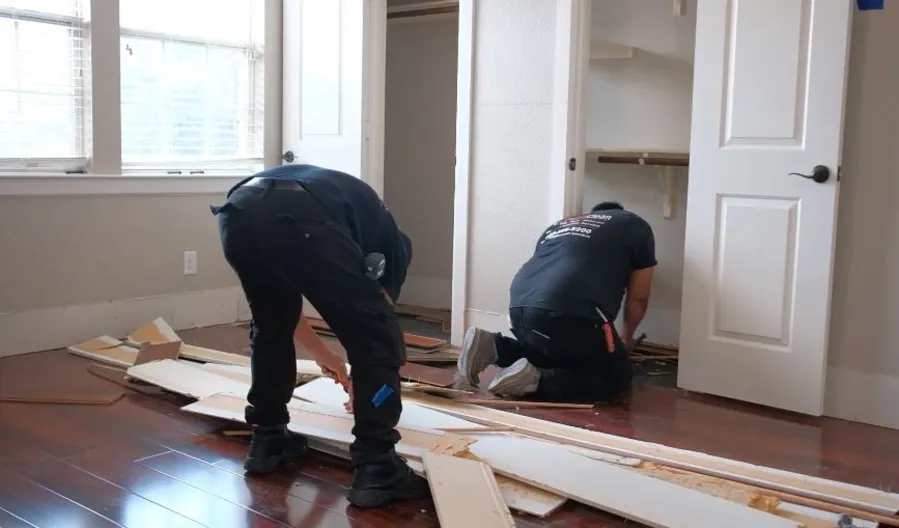
In Garland, TX, water damage restoration typically runs $500 to $6,000 for a standard residential job: a burst pipe, an appliance overflow, a localized leak. Larger losses involving sewage contamination, extensive structural drying, or major reconstruction can run $8,000 to $25,000 or more. Real Garland-area project data shows a typical range of roughly $600 to $15,000, averaging around $4,500, which lines up with what we see on the ground here.
That’s a wide range because “water damage restoration” covers everything from “a cabinet got wet” to “half the first floor flooded.” The rest of this page breaks down exactly why. (Note: these ranges reflect typical residential jobs. Commercial losses have a different cost structure entirely, covered on our commercial water damage restoration page.)
Cost By Water Category: This Is What Actually Drives Price
The single biggest factor in your final number isn’t square footage. It’s what kind of water it is.
| Water Category | What It Means | Typical Cost Range |
|---|---|---|
| Category 1: Clean Water | Burst supply line, appliance supply hose, rainwater | $1,500 – $5,000 |
| Category 2: Gray Water | Washing machine overflow, dishwasher discharge, aquarium leak | $3,000 – $8,000 |
| Category 3: Black Water | Sewage backup, flooding from Duck Creek or Rowlett Creek, toilet overflow with waste | $8,000 – $25,000+ |
Contaminated (Category 3) water adds a real premium: typically 25% to 100% more than the same square footage of clean water, because of the additional PPE, containment, disposal, and disinfection required. One homeowner dealing with a sewage backup put it bluntly online: don’t forget the added fees for bio-waste handling. That’s not a scam charge. It’s a real, necessary part of doing that job safely.
Cost Breakdown By Service
| Service | Typical Cost |
|---|---|
| Water extraction | $200 – $1,500 (depends on volume of standing water) |
| Structural drying & dehumidification | $300 – $4,500 (equipment runs $50–$200/day) |
| Drywall & ceiling repair | $400 – $3,000 |
| Mold remediation, if moisture went untreated | $500 – $6,000 |
| Slab leak detection & repair | Often $200–$300 per linear foot for the plumbing work alone |
| Full reconstruction (flooring, drywall, paint, trim) | $50 – $200+ per square foot |
That slab-leak line matters here specifically. Garland and the surrounding DFW area sit on expansive clay soil, and slab leaks are a genuinely common local issue, not a rare edge case. A Plano homeowner (right next door to Garland) recently reported a slab trenching repair running close to $11,000, and that’s before any water damage restoration on top of it.
What Actually Moves The Number Up Or Down
| Factor | Why It Matters |
|---|---|
| How fast you call | The single biggest lever you actually control. Standing water sitting three days vs. three hours is the difference between “dry it out” and “tear out and rebuild.” One Richardson homeowner fixed a minor leak for under $100 by catching it early; another ignored leak meant a $10,000–$12,000 quote for the same category of job. |
| Square footage & rooms affected | More affected area means more extraction, more drying equipment, more time. |
| Whether reconstruction is needed | Drying a wet closet is a different job than replacing drywall, insulation, flooring, and repainting an entire room. |
| Timing | After-hours and weekend emergency calls typically cost more than a scheduled daytime visit. True everywhere, including Garland’s 75040, 75041, 75042, 75043, 75044, 75046, 75047, or 75049 zip codes. |
| Access & hidden moisture | Water behind walls, under cabinets, or in a subfloor takes longer to find and dry than a puddle on an open floor. |
Why Two Quotes For The “Same” Job Can Look Completely Different
If you’ve gotten more than one estimate and they don’t remotely match, you’re not imagining it. This is one of the most common complaints in this industry. Real examples from homeowners dealing with exactly this:
| What Homeowners Report | The Reality |
|---|---|
| Quoted $10,000–$12,000 for dry-out service | Another homeowner’s actual total for a comparable job, including materials and three site visits, came to $1,500. |
| Surprised by line-item equipment rental charges | Dehumidifiers billed separately, per day, without that being made clear upfront. |
| “They should have given an estimate you sign beforehand” | The complaint isn’t usually about price being high. It’s about price changing after the crew is already inside. |
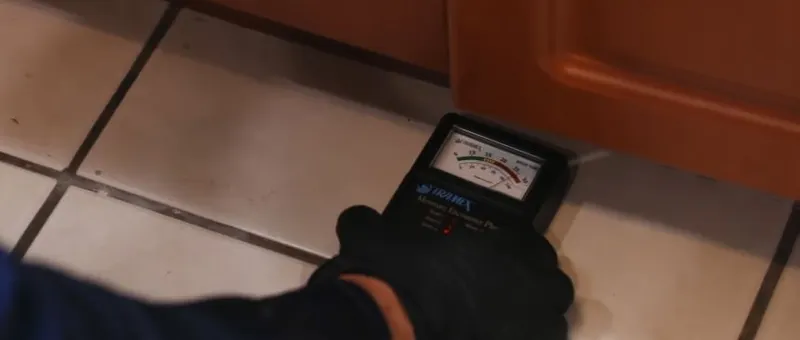
This is exactly why we do it differently: you get a written estimate after we’ve actually inspected the property, before any tool comes out of the truck. If the scope changes because we find something once work is underway (which does happen, especially with hidden moisture), we tell you before we proceed, not after you get the invoice.
Does Insurance Cover It?
Often, yes, but it depends entirely on the cause. Sudden, accidental events (a burst pipe, an appliance failure, storm damage) are typically covered under standard homeowners insurance, minus your deductible. Water from outside the home (flooding from Duck Creek, Rowlett Creek, or a storm surge) generally is not covered by a standard homeowners policy and requires separate NFIP flood insurance.
Gradual damage (a slow leak that went on for months, or damage from lack of maintenance) is also commonly excluded or limited, regardless of the source.
Real numbers from actual claims: homeowners report insurance-covered restoration and repair claims commonly landing anywhere from $5,000 to $30,000+ depending on scope. One homeowner described a $30,000 total claim that included roughly $5,000 in replacement work alone. Your specific coverage, deductible, and claim outcome depend on your policy. We’re not your insurance company, but we document conditions thoroughly (photos, moisture readings, written scope) because that’s exactly what a claim needs to move smoothly.
Getting An Accurate Number For Your Specific Situation
A real number depends on:
- ✓What kind of water is it? (Clean pipe burst vs. sewage vs. storm flooding)
- ✓How many rooms or square feet are affected?
- ✓How long has it been wet?
- ✓Is there visible or suspected mold?
- ✓Does anything need to be rebuilt, or just dried and cleaned?
We can give you a much more accurate range over the phone once we know these answers, and a fully accurate number once we’ve actually inspected the property in person. Ready to get started? Request a written estimate and we’ll walk through it together.
Cost FAQs
How much does water damage restoration cost in Garland, TX?
Standard residential jobs typically run $500 to $6,000. Larger losses involving sewage, extensive structural drying, or major reconstruction can run $8,000 to $25,000 or more. Garland-area project data shows a typical range of roughly $600 to $15,000, averaging around $4,500.
What’s the difference between water damage mitigation and restoration, cost-wise?
Mitigation is the emergency phase (extraction, drying, cleaning) and stops the damage from getting worse. Restoration is the rebuild phase: drywall, flooring, paint. Mitigation alone is often the $500–$4,500 range; adding reconstruction pushes the total higher.
Is water damage restoration cost per square foot or a flat rate?
Both models exist. Extraction and drying are often estimated per square foot ($4–$12/sq ft is a common national range for that phase alone), while full reconstruction is typically bid per square foot as well ($50–$200+/sq ft depending on materials). Garland Restore provides a written total scope, not just a per-square-foot number that leaves you guessing at the final bill.
Why did my quote change after the company started work?
This shouldn’t happen without you being told first. It sometimes happens legitimately (hidden moisture behind a wall that wasn’t visible during the initial inspection), but you should be informed and asked to approve any change before it’s added to your bill, not after.
Does insurance cover water damage restoration in Garland?
Often, for sudden and accidental events like a burst pipe, minus your deductible. Flooding from outside the home (Duck Creek, Rowlett Creek, storm surge) generally requires separate NFIP flood coverage, not a standard homeowners policy. Gradual, long-term leaks are commonly excluded or limited.
Will I need mold remediation on top of water damage restoration?
Not always, but mold can begin colonizing wet materials within 24 to 48 hours of exposure, so if water sat for more than a day or two before treatment, it’s worth having the area checked. Mold remediation typically adds $500 to $6,000 depending on the extent.
Why is sewage backup restoration so much more expensive than a clean water leak?
Category 3 (black water) cleanup requires additional PPE, containment, disposal of contaminated porous materials, and disinfection procedures that clean-water jobs don’t need, typically adding 25% to 100% to the cost of an equivalent clean-water job.
Do you charge extra for after-hours or emergency calls?
Emergency, after-hours response typically costs more than a scheduled daytime visit, which is standard across this industry. We’ll always tell you that upfront, not bury it in the final invoice.