Commercial Damage Restoration
Stop The Water. Protect The Building. Keep The Business Moving.When water enters a Garland business, the damage isn’t limited to drywall and flooring. It can interrupt operations, affect inventory, create employee and customer safety concerns, damage electrical or mechanical systems, and leave tenants or departments unable to use part of the building.
Garland Restore provides 24/7 commercial water damage restoration in Garland, TX, for offices, retail properties, warehouses, manufacturing facilities, restaurants, multifamily buildings, and other commercial properties within our service capabilities.
Our commercial response can include emergency water extraction, moisture mapping, structural drying, containment, cleaning, affected-material removal, loss documentation, and repair planning. Looking for residential or general water damage help? See our main water damage restoration service for Garland, TX. We don’t begin with unnecessary demolition or a generic equipment package. We inspect the property, identify where the water traveled, and build a recovery plan around the building, the affected materials, and the parts of your operation that must keep running.
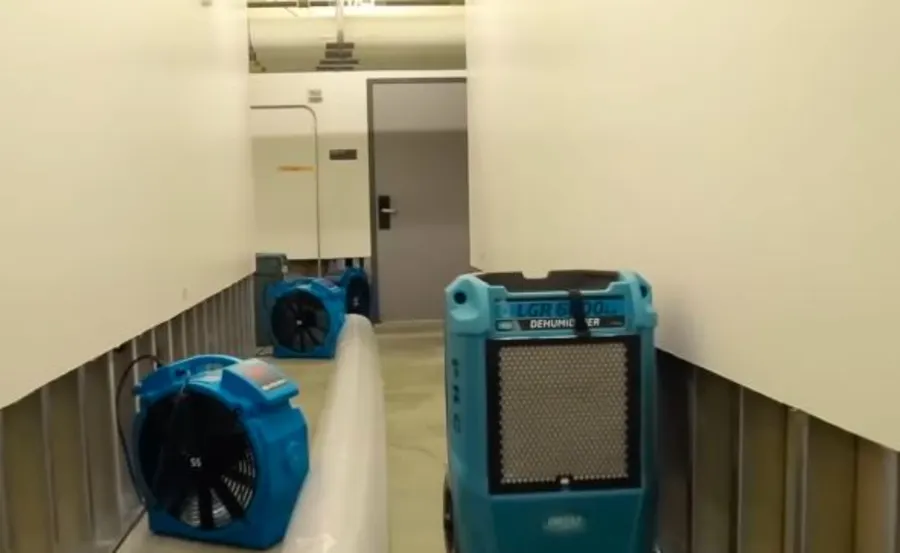
Active Water Inside Your Business?
Call immediately when water is still entering the property, spreading between rooms or floors, reaching inventory, affecting electrical components, or interrupting essential operations.
When safe and authorized:
- ✓Stop the source or isolate the affected plumbing system
- ✓Keep employees and customers away from standing water
- ✓Do not operate wet electrical equipment
- ✓Protect unaffected inventory and records without entering an unsafe area
- ✓Photograph visible conditions before moving or discarding items
- ✓Contact the building owner, property manager, or facility manager
- ✓Call Garland Restore at (972) 526-5223
Water and electricity create a serious workplace hazard. Do not enter a wet electrical room, touch submerged equipment, or operate machinery that may have been affected until an appropriately qualified professional has evaluated the danger. OSHA recognizes water exposure as a significant electrical risk in workplaces.
For fire, structural collapse, electrical arcing, active gas release, or any other immediate threat to life, call 911 before contacting a restoration company.
What Is Commercial Water Damage Restoration?
This is the process of stabilizing a water-damaged business property: extracting standing water, locating hidden moisture, drying affected building systems, cleaning the site, documenting the loss, and coordinating repairs so the property can return to safe use.
Commercial restoration differs from a typical residential dry-out because a business may have:
- ✓Employees, customers, and multiple tenants
- ✓Inventory, equipment, and sensitive records
- ✓Shared electrical, plumbing, and HVAC systems
- ✓Larger floor areas and higher ceilings
- ✓Concrete, steel-stud, and commercial flooring assemblies
- ✓Operational or production deadlines
- ✓Health, food-service, or facility requirements
- ✓Several decision-makers and insurance interests
- ✓Areas that need to remain open while other areas are restored
Commercial Restoration Built Around Garland Businesses
Garland isn’t only a residential city. It’s one of Texas’s established manufacturing centers, home to more than 300 manufacturers, companies like General Dynamics, Raytheon, Kraft Heinz, Sherwin-Williams, Epiroc, and KARLEE have operated here, alongside logistics operations, food producers, retailers, offices, restaurants, and growing commercial districts. Garland is also home to three of the world’s leading hat manufacturers (Resistol, Master Hatters, and Milano Hats), a small but telling sign of how varied the city’s commercial base actually is. Local workforce training runs through Garland ISD, Dallas College, and the Dallas County Manufacturers Association (DCMA), and Garland Power & Light (the city’s own utility and the third-largest municipally-owned electric utility in Texas) is a detail that matters more than it sounds: available electrical capacity is a real constraint on how much commercial drying equipment a property can run at once, and it’s exactly the kind of local-infrastructure knowledge that shapes a realistic drying plan rather than a generic one.
That business mix creates very different water-loss scenarios:
- ✓A leaking supply line in a Downtown Garland office may affect ceiling tiles, computer equipment, and adjoining tenants.
- ✓A failed sprinkler line inside a Jupiter–Miller industrial property may spread across concrete floors, steel-stud walls, stored product, and electrical pathways.
- ✓A roof or HVAC leak near Firewheel can enter a retail ceiling overnight and stay hidden until staining, odor, or flooring changes appear.
- ✓A restaurant water loss may require rapid extraction while protecting kitchen equipment, stored food, and customer areas.
- ✓A multifamily loss can move from an upper unit into lower units, hallways, electrical chases, and shared wall assemblies.
Garland Restore evaluates the actual commercial system, not just the visible puddle.
Commercial Areas We Serve
We provide commercial water damage services throughout Garland, including properties around Downtown Garland, Firewheel and North Garland, the Jupiter–Miller industrial areas, South Shiloh Road, the I-635 and Garland’s southern commercial corridors, Belt Line Road, Lavon Drive, Broadway Boulevard, Buckingham Road, Garland Road, and Duck Creek and surrounding commercial areas.
Also serving selected commercial properties in Rowlett, Richardson, Mesquite, Sachse, Rockwall & Plano.
Common Causes Of Commercial Water Damage
Fire Sprinkler & Suppression Failures
Even well-maintained dry sprinkler systems can fail in ways that cause serious water damage to a building’s electrical and heating systems, sometimes releasing thousands of gallons before the flow is isolated.
Plumbing & Supply-Line Failures
A leak that occurs overnight or over a weekend can affect a much larger area before anyone discovers it. In multi-floor properties, a single failed boiler or pump station can send water traveling through many floors before it’s caught. See burst pipe and plumbing leak water damage for how that response works.
Roof, Flashing & Drainage Failures
The visible ceiling stain may be only one part of the affected area. Storm damage, blocked roof drains, and damaged flashing let water into insulation and occupied areas alike.
HVAC & Condensate Leaks
A blocked drain or failed pan can wet ceiling tiles, insulation, drywall, flooring, and electrical components above occupied space.
Sewer & Drain Backups
A sewer backup isn’t handled like a clean-water plumbing leak. Contaminated water may require isolation, protective equipment, and removal of affected porous materials.
Stormwater & Exterior Flooding
Garland’s mapped floodplain includes approximately 4,200 acres primarily along Duck Creek, Rowlett Creek, Spring Creek, and their tributaries. Exterior flooding raises different restoration and insurance issues than an internal plumbing loss.
Equipment & Process-Water Failures
Manufacturing, food production, and commercial laundry operations rely on equipment connected to water, steam, drainage, or cooling systems. The plan has to account for the equipment, not just the building.
Upper-Floor & Neighboring-Tenant Leaks
In multi-tenant properties, water can travel through floor assemblies and utility chases before becoming visible in the lower space. By the time it’s visible on your ceiling, it may have already been traveling for hours.
Signs Of Hidden Water Damage In A Commercial Property
Not every commercial loss begins with visible flooding. Call for an inspection when you notice:
- ✓Ceiling tiles staining, sagging, or falling
- ✓A musty odor in an office, stockroom, or hallway
- ✓Carpet tiles releasing from the floor
- ✓Luxury vinyl tile bubbling or lifting
- ✓Baseboards separating from walls
- ✓Drywall becoming soft or swollen
- ✓Water appearing around floor drains
- ✓Condensation or staining near HVAC equipment
- ✓Unexplained humidity in one part of the building
- ✓Rust around ceiling grids or metal components
- ✓Electrical outlets or equipment behaving abnormally
- ✓Water bills increasing without an identified reason
- ✓Inventory packaging becoming damp or warped
- ✓Moisture appearing in a lower tenant’s ceiling
A visual inspection alone may not reveal water under flooring, behind walls, above ceilings, or inside insulation.
What Commercial Water Can Damage
Operations
Water may shut down an individual office, customer area, production line, kitchen, loading area, or entire building. The restoration plan should identify which spaces must close and which may remain operational.
Inventory & Merchandise
Boxes, packaging, textiles, paper products, food items, building supplies, and stored goods may absorb moisture even when they weren’t directly submerged.
Electrical & Technology
Water may affect outlets, panels, wiring, server rooms, security equipment, and production machinery. We coordinate the drying scope with the appropriate licensed trades.
Flooring Systems
Glued-down carpet, LVT, sheet vinyl, tile, wood, polished concrete, and raised floors can hold water beneath the surface even when it appears dry on top.
Walls & Ceilings
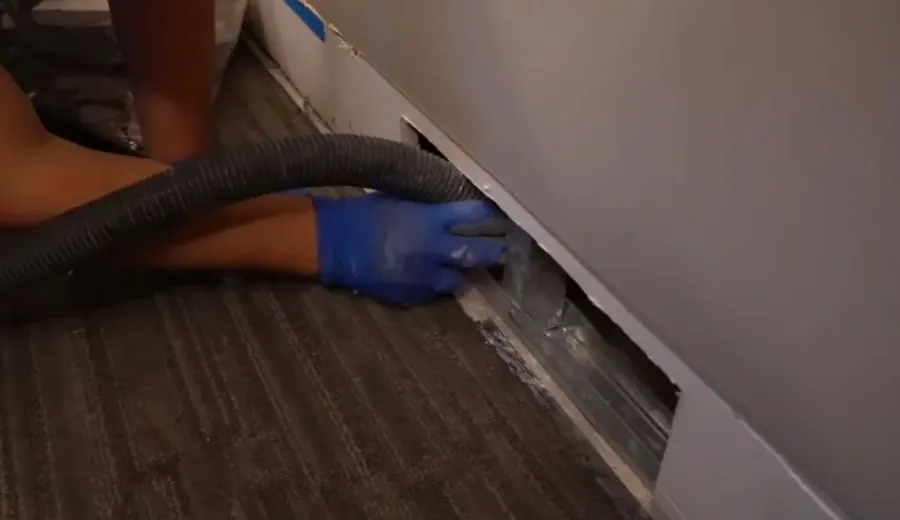
Water often sits inside steel-stud C-channel tracks, where no moisture meter can see through drywall to confirm it. Controlled compression cuts are sometimes necessary rather than guessing from a surface reading alone. Left unaddressed, this kind of hidden moisture is also exactly how commercial mold problems get started. See our mold remediation guide for what that process involves.
Documents & Records
Paper files, plans, contracts, and other records may require careful inventory, separation, and specialized recovery decisions.
Our Commercial Water Damage Restoration Process
Emergency Intake & Authorization
Location, suspected source, whether water is still active, affected areas, and who’s authorized to approve emergency work.
Safety & Source Coordination
We focus on the resulting water damage while coordinating with the plumber, roofer, or trade responsible for the failed system.
Inspection & Moisture Mapping
Moisture readings, humidity, thermal imaging as a screening tool, water-category evaluation, and full photo documentation.
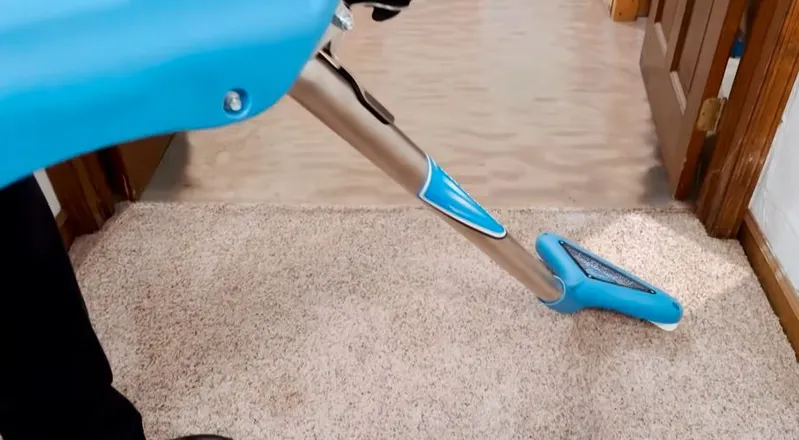
Water Extraction
Pumps and extractors sized to the volume of water and affected surface: open floors, carpet, hard flooring, and recessed spaces.
Containment & Zoning
Dividing the property into affected, controlled, and unaffected areas, often the real coordination work in a multi-tenant loss.
Structural Drying
Air movers, dehumidifiers, and desiccant drying when the loss calls for it, sized to what the building’s electrical capacity can actually support.
Monitoring & Adjustment
Moisture readings guide the timeline, not a fixed number of days. Equipment gets adjusted as drying actually progresses.
Controlled Material Removal
Not every wet wall is demolished automatically. Where removal is needed, it’s typically cut to a consistent height, commonly around two feet.
Cleaning & Treatment
Soil removal, appropriate disinfectants, odor control, and disposal of unsalvageable porous materials.
Documentation & Planning
A full record of conditions, work completed, and what reconstruction comes next.
Business Continuity & Phased Reopening
Commercial restoration isn’t only about making the building dry. It’s also about determining how the business can keep operating safely. Ready.gov recommends that businesses maintain continuity and recovery plans for disruptions, including communications, information technology, and essential operations.
When conditions allow, Garland Restore can structure the restoration plan around essential departments or production areas, employee and customer access, tenant communication, inventory movement, delivery and loading access, after-hours work, noise-sensitive periods, dust and containment boundaries, temporary relocation within the property, and priority areas required for reopening.
For losses large enough to involve multiple insurance interests (a strata or HOA-managed building, a multi-tenant office, an apartment complex), it’s common for an independent assessment or building-consulting firm to work alongside the insurance adjuster to help quantify the loss and confirm what the claim should reasonably cover. Garland Restore documents the restoration side of that process thoroughly, precisely because commercial stakeholders in these situations are rarely just one owner and one insurer.
Industries & Commercial Properties We Serve
Offices
Ceiling leaks, plumbing failures, wet carpet, wall-cavity moisture, and neighboring-tenant losses, while helping management coordinate access and employee disruption.
Retail Stores
Customer safety, merchandise protection, point-of-sale equipment, flooring, after-hours extraction, and reopening customer areas in phases.
Warehouses & Logistics
Large floor areas, high ceilings, loading zones, stored inventory, and limited electrical distribution affecting equipment layout.
Manufacturing & Industrial
Machinery, process areas, production schedules, and multiple stakeholders. Garland’s large manufacturing base makes this a key local service category.
Restaurants & Food Service
Supply-line failures, drain backups, sprinkler discharge, and roof leaks. Food and food-contact areas may require separate decisions from the building scope.
Churches, Schools & Community
Protecting assembly areas, classrooms, offices, records, flooring, and scheduled activities.
Apartments & Multifamily
Water migrating between units, hallways, and shared systems, coordinating ownership, management, tenants, and insurance.
Medical & Care Facilities
Sensitive occupants and equipment, coordinated with the facility’s authorized management and safety personnel.
Commercial Insurance And Loss Documentation
Commercial property claims may involve several separate interests: building ownership, tenant improvements, business personal property, inventory, equipment, business interruption, property-management obligations, separate insurers or adjusters, and lease responsibilities.
Garland Restore doesn’t decide whether an insurance claim is covered. We can provide restoration documentation such as photographs, moisture readings, affected-area diagrams, equipment records, drying documentation, material-removal records, written scope, estimates, invoices, and project communication records. Coverage depends on the policy, cause of loss, exclusions, limits, deductibles, and the carrier’s determination.
Exterior flooding is different from an internal plumbing loss. Garland participates in FEMA’s National Flood Insurance Program, which allows eligible property owners and businesses to purchase separate protection against flood losses.
What Should A Business Document Immediately?
When safe, record the date and time the loss was discovered, suspected cause, areas affected, photographs and video, damaged inventory or equipment, employees or tenants affected, initial shutdown time, emergency services contacted, temporary operating expenses, and communications with ownership and insurance. Don’t discard damaged property before documenting it and confirming what the insurer or authorized decision-maker requires.
What Does Commercial Water Damage Restoration Cost?
Commercial recovery doesn’t have one honest flat price. A small office leak may need limited extraction and targeted drying. A warehouse, retail, restaurant, or multi-tenant loss may involve larger areas, specialized equipment, after-hours labor, inventory handling, and reconstruction.
Commercial cost is affected by total area and volume of water, number of rooms/suites/floors, water source and contamination category, type of flooring and wall construction, hidden moisture, ceiling height and access, amount of equipment required, available electrical power, inventory or contents handling, containment requirements, after-hours scheduling, material removal, regulated-material testing, cleaning requirements, and repair/reconstruction scope.
Garland Restore evaluates the property and provides a written scope rather than a low phone-quoted number that changes after work begins. (For residential-scale cost ranges by water category, see our water damage cost guide.)
How Long Does Commercial Structural Drying Take?
Many straightforward commercial drying projects take several days, but large, complex, or concealed losses can take longer. A large multi-floor loss with concealed moisture in steel-stud cavities or beneath multiple flooring types can reasonably extend into weeks, not days, before the space is confirmed dry.
The timeline depends on building size, water volume, materials affected, exposure duration, contamination, access to concealed spaces, available power, equipment capacity, operating restrictions, whether materials can remain in place, and repairs required after drying. A commercial project should never be declared dry solely because a fixed number of days has passed. Moisture readings and material conditions guide that decision, not the calendar.
Why Garland Businesses Call Garland Restore
Downtime Has A Cost
Our plan considers the building and the work being performed inside it.
Inspect Before Removing
Wet doesn’t automatically mean unsalvageable. Removal decisions are based on material condition, contamination, access, and drying feasibility.
We Talk To Decision-Makers
We coordinate with owners, facility managers, property managers, tenants, and insurance representatives while maintaining a clear chain of authorization.
We Document The Loss
Commercial stakeholders need more than a verbal assurance that the building is dry.
We Know Garland’s Commercial Base
Manufacturing, industrial, logistics, retail, restaurant, office, and multifamily properties, not one uniform building type.
An Honest Response Plan
We explain what can begin immediately, what requires another trade, and what can’t be confirmed until inspection.
Commercial Water Damage Preparedness
A water emergency is easier to manage when responsibilities are established before the loss.
Commercial property owners and facility managers should consider maintaining: a current emergency contact list, main and sectional water-shutoff locations, a fire-suppression contractor contact, electrical and HVAC contacts, building plans, tenant and employee notification procedures, insurance-policy and claim contacts, inventory records, data-backup procedures, authorized emergency spending limits, after-hours property access, vendor authorization requirements, and a business-continuity plan.
Garland Restore can be added to your commercial emergency contact list before a loss occurs.
Commercial Water Damage Restoration FAQs
What does commercial water damage service TX include?
Commercial water damage restoration can include emergency assessment, water extraction, moisture mapping, containment, structural drying, cleaning, documentation, affected-material removal, and repair planning. The exact scope depends on the source, affected materials, and operational requirements.
How quickly can Garland Restore respond to a commercial water emergency?
Garland Restore accepts emergency calls 24 hours a day. After confirming the property location, loss conditions, access, and current crew availability, we give the most realistic available response window rather than an unsupported arrival guarantee.
Can my business remain open during restoration?
Part of the property may remain open when affected and unaffected areas can be safely separated. The decision depends on contamination, electrical safety, building systems, customer access, facility requirements, and the extent of damage.
Do you provide commercial water mitigation in Garland, TX?
Yes. Commercial water mitigation can include source coordination, emergency extraction, containment, protection of unaffected areas, structural drying, and documentation intended to prevent the loss from spreading.
Do you handle office, retail, and warehouse water damage?
Yes. Garland Restore serves offices, retail properties, warehouses, manufacturing facilities, restaurants, multifamily buildings, and other commercial properties within our current service capabilities.
Can you work after normal business hours?
Commercial emergency calls are accepted 24/7. After-hours work may be arranged when appropriate for the project, property access, and crew availability.
Do you work with commercial insurance claims?
Garland Restore can provide photographs, moisture readings, drying records, scopes, estimates, and invoices. The insurance company determines coverage and payment under the applicable policy.
How do you find water behind walls or under commercial flooring?
We use visual inspection, moisture meters, humidity readings, and thermal imaging when appropriate. Suspected moisture patterns are confirmed using direct readings or additional inspection methods.
Does every wet commercial wall need to be removed?
No. Material removal depends on the water category, exposure duration, material condition, contamination, and whether the assembly can be accessed and dried effectively.
Who can authorize commercial restoration work?
Authorization may come from the property owner, facility manager, property manager, corporate representative, or another person with authority under the lease or management agreement. Tenants should contact ownership or management when they don’t have repair authority themselves.
Do you respond to fire sprinkler leaks?
Yes. After the sprinkler or suppression system has been isolated by the appropriate authorized party, Garland Restore can evaluate and address the resulting water damage.
What areas do you serve?
We serve commercial properties throughout Garland zip codes 75040, 75041, 75042, 75043, and 75044, along with selected properties in Rowlett, Richardson, Mesquite, Sachse, Rockwall, and Plano.