Mold Remediation in Garland, TX
Removed Properly. Documented Honestly. Done The Way Texas Law Actually Requires.If you’re searching for mold remediation in Garland, TX, you’ve probably already seen a stain, smelled something musty, or been told by an inspector, a plumber, or an insurance adjuster that there’s a mold problem somewhere in your home or business. This page will tell you exactly what that means, what Texas law actually requires before anyone touches it, and how Garland Restore approaches the work (no scare tactics, no vague promises, no shortcuts) the same standard we hold for every water damage restoration in Garland, TX job we take on.
Is What You’re Looking At Actually Mold?
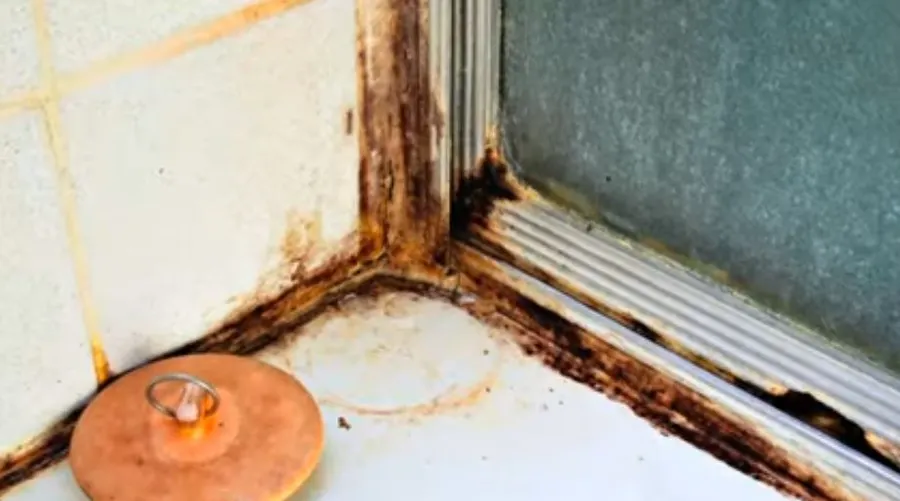
Not every stain is mold, and not every musty smell means an infestation. Before you assume the worst (or assume it’s nothing) here’s what actually distinguishes mold from its common look-alikes:
Mold
Usually fuzzy, slimy, or velvety, in black, green, white, orange, or blue-green patches, spreading irregularly along moisture paths.
Mildew
A specific, surface-level type of mold or fungus, typically white or gray and powdery, most often on damp surfaces like shower tile or windowsills.
Mineral Deposits / Staining
Flat, doesn’t grow, doesn’t spread over time, a stain from a one-time leak isn’t automatically mold, though it can signal conditions were once right for it.
Soot Or Dirt
Dry to the touch, no musty odor associated with active mold growth.
A Simple Household Check
Dab a small amount of diluted household bleach on the spot. If the discoloration lightens noticeably within a couple of minutes, it’s more likely a surface stain, dirt, or mildew. If it doesn’t lighten, it’s more likely mold growing into the material itself. This is a rough household test, not a substitute for actual testing, treat it as a first clue, not a diagnosis.
Still not sure? That’s exactly what a licensed mold assessment is for, and under Texas law, that assessment has to come from a source independent of whoever does the remediation work. More on that below, because it’s the single most important thing to understand before you hire anyone.
Why Garland’s Climate Makes Mold So Common Here
Garland sits in North Texas’s humid subtropical climate, hot, genuinely humid summers, and enough seasonal rainfall that moisture problems are a normal part of owning property here, not a rare misfortune. Add in Garland’s own building history and geography, and the risk profile gets more specific:
| Local Factor | Why It Matters |
|---|---|
| Typical Garland home built in 1978 | Galvanized steel supply lines or cast-iron drains corrode from the inside out over decades, a slow, unnoticed leak inside a wall is one of the most common ways mold gets started. |
| Newer construction (Firewheel, North Garland) | PEX plumbing resists corrosion, but tighter, energy-efficient building envelopes trap humidity and recirculate indoor air more than older, “leakier” homes did. |
| Attic-mounted AC condensate lines | Common in Firewheel-area builds, a clogged line can drip into a ceiling cavity for weeks before a stain ever becomes visible. |
| Garland’s documented flood history | May 2015 Duck Creek flood, December 2015 EF4 tornado, and the May 28, 2024 storm, mold can begin colonizing wet materials within 24 to 48 hours of exposure. A flood from years ago can be the actual origin story of a mold problem someone is only now noticing. |
None of this means every Garland home has a mold problem. It means the conditions that cause mold (moisture, organic material, and time) are genuinely more present here than in a lot of places, which is exactly why “we’ll just paint over it” is such a common and costly mistake.
Understanding Mold: Without The Scare Tactics
Here’s something worth knowing before you panic: mold is naturally present in every environment on Earth, indoors and outdoors, all the time. Remediation isn’t about eliminating mold from your life entirely, that’s not achievable, and any company promising a mold-free home forever isn’t being straight with you. Remediation is about removing the active growth and controlling the conditions that let it grow out of control indoors.
That distinction matters because it changes what “remediation” should actually mean. Killing mold with a chemical spray is not the same as remediating it. Industry standards are clear that removal, not just killing, is the goal: dead mold spores can still cause allergic and respiratory symptoms, and a “kill it and leave it” approach often leaves the underlying material, and the underlying moisture problem, exactly where it was.
One perspective worth keeping in mind: even penicillin is derived from a species of Penicillium mold, mold itself isn’t inherently the enemy. The problem is uncontrolled indoor growth in the place you live or work, not mold as a concept.
Texas Law Protects You Here: Most Homeowners Don’t Know This
This is the part of mold remediation that almost no one explains clearly, and it’s the single most important thing to understand before you hire anyone in Texas.
Texas Occupations Code Chapter 1958 (the Texas Mold Assessment and Remediation Rules) makes it illegal for the same company to both assess and remediate mold on the same project. This isn’t a suggestion or a best practice. It’s state law, enforced by the Texas Department of Licensing and Regulation (TDLR), and it exists specifically because a company that profits from finding a bigger problem has an obvious conflict of interest in deciding how big that problem actually is.
How The Law Separates The Two Roles
| Role | What They Do |
|---|---|
| Mold Assessment Consultant (MAC) / Technician (MAT) | Licensed to inspect the property and, if remediation is needed, write the remediation protocol, a specific, written work plan. |
| Mold Remediation Contractor (MRC) | Licensed to carry out that protocol. Doesn’t get to decide the scope of its own job. |
| Certificate of Mold Damage Remediation (CMDR) | Issued within 10 days of completion, including a verification statement from the assessment consultant. |
If you sell the property within 5 years, Texas law requires you to give the buyer copies of any CMDRs issued during that period.
Two narrow exceptions exist: visible mold covering less than 25 contiguous square feet doesn’t require a licensed assessor or remediator, and owner-occupants can do limited remediation work on their own home under specific circumstances. Beyond those exceptions, licensing applies.
What this means for you, practically: if a company offers to inspect your property for mold and also quote you the remediation work, that’s worth asking direct questions about. Garland Restore performs remediation according to a licensed assessment protocol, we don’t write our own scope and then sell you the fix for a problem we defined ourselves. If you don’t have an independent mold assessment yet, we can talk through what that process looks like and help you understand what a proper protocol should include before any remediation work begins.
You can verify any mold license (assessor or remediator) directly at TDLR’s license search tool.
Signs You May Have A Mold Problem
- ✓A musty, earthy smell in a closet, bathroom, attic, or laundry room
- ✓Visible discoloration, black, green, white, or gray patches
- ✓Paint or wallpaper bubbling, peeling, or feeling soft
- ✓Allergy-like symptoms that improve when you leave the property
- ✓A water bill that jumped without explanation
- ✓Warped, cupping, or soft flooring
- ✓Condensation regularly forming on windows or AC vents
- ✓Any past water damage that wasn’t fully dried out
If any of this sounds familiar, remember the timeline: mold can begin colonizing wet materials within 24 to 48 hours of exposure. The gap between “there was a leak” and “now there’s a mold problem” is often shorter than people expect.
Common Causes Of Mold In Garland Homes
| Cause | Detail |
|---|---|
| Slab leaks | Common in Texas foundation homes on expansive clay soil, can introduce moisture under flooring long before it becomes visible |
| AC condensate line backups | Especially in Firewheel-area homes with attic-mounted units |
| Roof and hail damage | A slow-motion moisture source, often unnoticed until interior staining or odor appears |
| Sewage backups from tree-root intrusion | In older Garland neighborhoods, introduces contaminated water alongside the mold risk |
| Storm and flash flooding | Near Duck Creek, Rowlett Creek, Spring Creek, and the Centerville Road/I-635 corridor |
| Poor bathroom or kitchen ventilation | Allows everyday humidity to accumulate over months or years |
| Past water damage that wasn’t fully dried | Including damage that looked fine on the surface but left materials wet underneath |
Our Mold Remediation Process
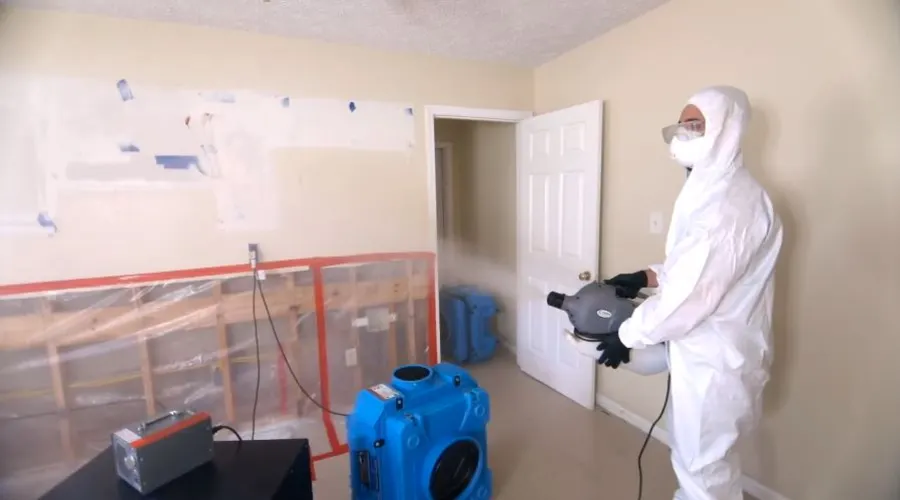
We follow the protocol provided by your licensed mold assessor, we don’t write our own scope for our own job. Within that framework, here’s what remediation typically involves:
Protocol Review
We start from the licensed assessor’s written protocol, not a guess. No protocol yet? We’ll walk you through what that looks like first.
Containment
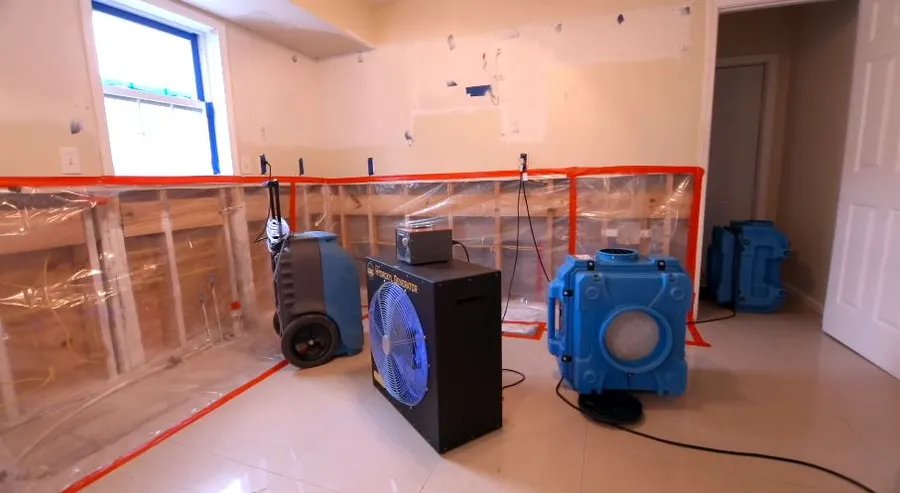
The affected area is isolated with containment barriers to prevent spores from spreading during the work.
Air Quality Control
HEPA-filtered air scrubbers and negative air pressure capture airborne spores during active work.
Removal, Not Just Killing
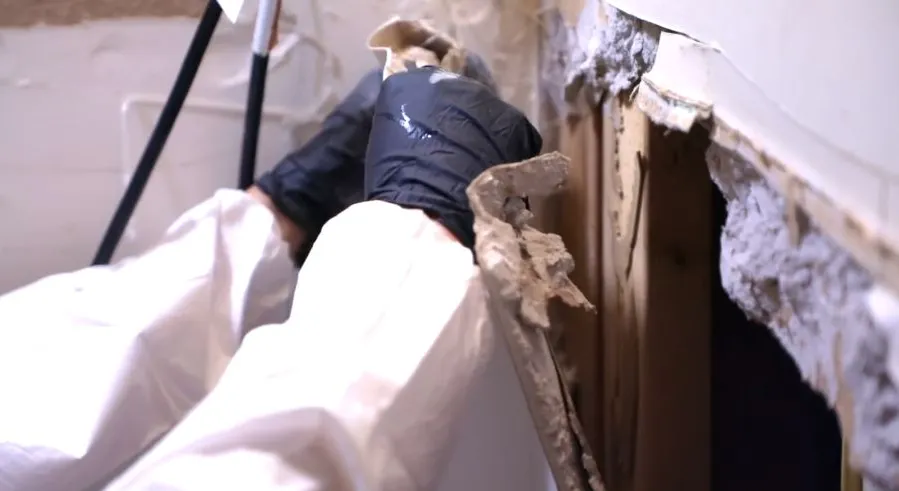
Affected porous materials are removed when they can’t be effectively cleaned. Non-porous materials are cleaned and treated instead.
Addressing The Source
We coordinate with the appropriate trade (plumber, roofer, HVAC technician) to make sure the water source is actually resolved.
Cleaning & Treatment
Remaining surfaces are cleaned and treated with antimicrobial products appropriate to the material and protocol.
Drying & Dehumidification
Air movers and dehumidifiers bring affected materials to appropriate dryness, moisture readings confirm this, not a fixed number of days.
Post-Remediation Verification
Your independent assessor conducts clearance testing to confirm mold levels are back within an acceptable range, documented proof, not just our word.
Black Mold: What’s True And What’s Exaggerated
Stachybotrys chartarum (commonly called “black mold”) gets more attention than almost any other mold species, and some of that attention is warranted, some of it isn’t.
What’s Accurate
Stachybotrys typically requires prolonged moisture exposure to establish itself, commonly associated with materials that have stayed wet for an extended period. It can produce mycotoxins, and it’s reasonable to take a confirmed finding seriously.
What’s Exaggerated
Not every black-colored mold is Stachybotrys: plenty of common, less concerning mold species are also dark-colored. Color alone doesn’t tell you the species; that requires actual testing, not a visual guess.
The practical takeaway: if you’re worried about black mold specifically, testing is what actually answers the question, not the color, not the smell, and not an unlicensed guess.
What Does Mold Remediation Cost In Garland, TX?
Mold remediation cost depends on the size of the affected area, the materials involved, whether the source has already been fixed, and what the licensed assessor’s protocol actually calls for.
As a general range, straightforward mold remediation jobs typically run $500 to $6,000, with cost scaling based on how far the growth has spread and how much material needs to come out.
That’s a range, not a promise. What we can promise: we work from a written protocol and a written scope, and that number doesn’t change once we’re inside your property pulling up flooring. For a broader breakdown of water damage costs by category, see our full cost guide.
Insurance And Mold Remediation
Mold coverage under a standard homeowners policy is more limited than most people expect, and it’s worth understanding before you assume it’s automatically covered.
Generally more likely to be covered: mold that results directly from a sudden, accidental covered event (like a burst pipe) when addressed promptly.
Generally excluded or limited: mold resulting from long-term neglect, ongoing humidity, or a leak that went unaddressed for an extended period. Many policies cap mold-remediation coverage at a specific dollar amount regardless of the actual cost.
We document conditions thoroughly (photos, moisture readings, and alignment with your licensed assessor’s protocol) because that documentation is exactly what a mold-related insurance claim needs. We can’t tell you what your specific policy covers; that’s between you and your carrier. We can make sure the paperwork on our end doesn’t become the reason a legitimate claim gets denied.
DIY Mold Removal vs. Calling A Professional
When DIY May Be Reasonable
A small, contained area of surface mold, under Texas’s Minimum Area Exemption, visible mold covering less than 25 contiguous square feet doesn’t require a licensed assessor or remediator. A small bathroom-tile mildew spot is a very different situation from a wall cavity.
When To Call A Licensed Professional
Anything larger than that 25-square-foot threshold, anything inside a wall cavity or HVAC system, any mold connected to a known water event, or any situation where someone in the home has asthma, allergies, or a compromised immune system.
Mold Remediation FAQs
Do I need a separate company for mold testing and mold remediation in Garland, TX?
Yes. Texas Occupations Code Chapter 1958 prohibits the same company from performing both mold assessment and mold remediation on the same project. You’ll need a licensed, independent mold assessor to inspect and write a protocol, and a separately licensed remediation contractor (which can be Garland Restore) to carry it out.
How much does mold remediation cost in Garland, TX?
Straightforward mold remediation typically runs $500 to $6,000, depending on the size of the affected area and how much material needs to be removed. We provide a written scope based on the licensed assessor’s protocol before work begins.
How fast does mold grow after water damage?
Mold can begin colonizing wet materials within 24 to 48 hours of exposure, which is why addressing water damage quickly matters as much for mold prevention as it does for the water damage itself.
Is black mold really more dangerous than other types?
Stachybotrys chartarum (“black mold”) can produce mycotoxins and is reasonable to take seriously when confirmed, but not every black-colored mold is Stachybotrys, and species identification requires testing, not a visual guess.
Will my homeowners insurance cover mold remediation?
It depends on the cause. Mold resulting from a sudden, accidental event like a burst pipe is more likely to be covered than mold from long-term neglect or unaddressed humidity, and many policies cap mold coverage at a specific dollar amount. Check your specific policy for details.
Can I do mold remediation myself?
For a small area (under Texas’s Minimum Area Exemption, less than 25 contiguous square feet of visible mold) licensing isn’t required, so DIY cleanup can be reasonable. Anything larger, or connected to a wall cavity, HVAC system, or major water event, should go to a licensed professional.
What’s the difference between mold removal and mold remediation?
Removal typically refers to physically taking out visible mold or affected materials. Remediation is the fuller process: identifying the moisture source, containing the area, removing what can’t be cleaned, treating what can be, fixing the underlying cause, and verifying through post-remediation testing that the job actually worked.
Do you offer mold inspections in Garland, TX?
Under Texas law, Garland Restore performs remediation according to an independent, licensed assessor’s protocol, we don’t perform the assessment and the remediation on the same project, because state law doesn’t allow it. We can help you understand what to look for in an independent assessment if you don’t have one yet.
How do I know if a mold company is actually licensed in Texas?
You can verify any Mold Assessment or Mold Remediation license directly at TDLR’s license search tool at tdlr.texas.gov. A licensed individual is required to carry a current TDLR license certificate with a license number on it.
What areas do you serve?
We provide mold remediation throughout Garland, TX (zip codes 75040, 75041, 75042, 75043, 75044, 75046, 75047, and 75049) along with Rowlett, Richardson, Mesquite, Sachse, Rockwall, and Plano.
Is the musty smell in my house definitely mold?
Not necessarily, but a persistent musty odor, especially one that’s stronger in a specific room or closet, is one of the most common early indicators of hidden mold growth and is worth having assessed, particularly if there’s any history of water intrusion in that area.
Does mold remediation include fixing the leak or moisture source?
Remediation addresses the mold itself and coordinates with the appropriate trade to resolve the moisture source, but the actual plumbing, roofing, or HVAC repair is typically performed by a licensed contractor in that trade. Remediating mold without fixing what caused it just delays the same problem coming back.