Water Damage Restoration in Rockwall, TX
Garland Restore provides water damage restoration in Rockwall, TX: emergency water extraction, structural drying, and moisture mapping, handled to the ANSI/IICRC S500 standard. We serve Rockwall homes and businesses from burst pipes to storm-related water intrusion.
Standing water or a wet property in Rockwall? We extract, dry, and verify the job with actual moisture readings, not a guess. Written scope before work starts. Call (972) 526-5223, day or night.
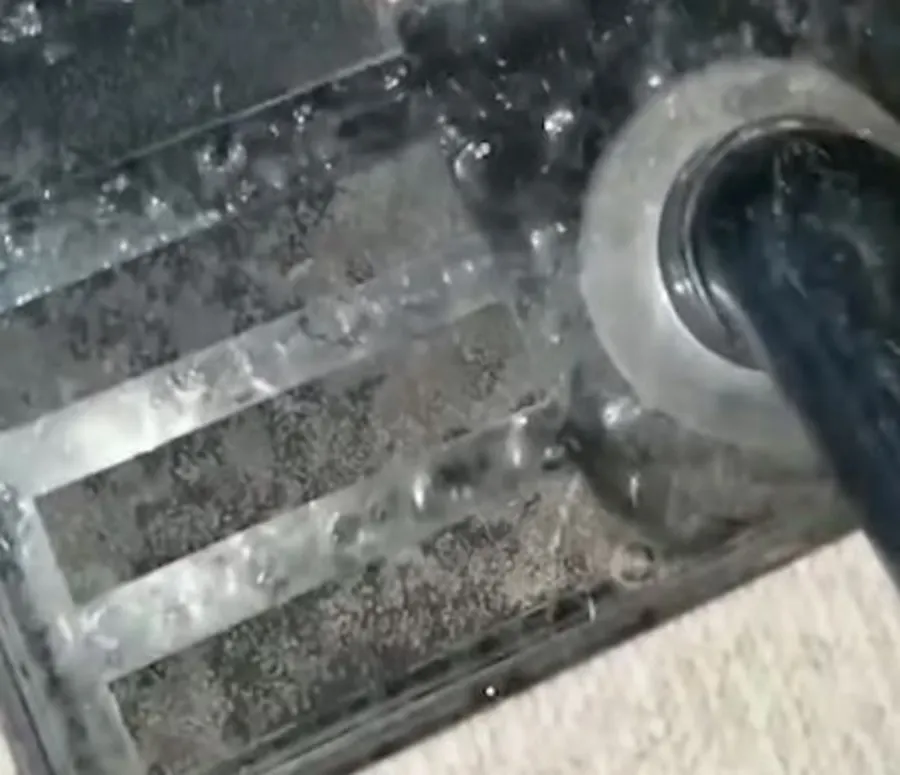
What Water Damage Restoration Actually Includes
Water damage restoration starts by identifying the source and category of the water, removing what’s standing, drying the materials that absorbed it, and verifying that drying with actual moisture readings, not a guess. What happens after that (cleaning, selective material removal, repairs) depends entirely on what the water touched, how contaminated it was, and how long it sat before anyone responded.
That breaks into three stages that matter for different reasons:
Assessment and mitigation. Before anything gets dried, someone has to identify the water source, classify what category of water it is, and map where moisture has actually traveled, not just where it’s visible. Standing water gets extracted and the property gets protected against further damage while the rest of the plan comes together.
Remediation and drying. This is the part that takes the longest and gets rushed the most. Air movers and dehumidifiers run until moisture readings, not a calendar, say the job is done. Materials that can be cleaned and dried in place get treated that way. Materials that can’t get removed, and that decision should be based on the specific material and how long it was wet, not a blanket policy.
Reconstruction and repairs. Drywall, flooring, framing, and ceiling work only after everything underneath has been verified dry. Skipping ahead to repairs before drying is confirmed is one of the most common reasons water damage jobs go wrong.
Restoration is not the same thing as mitigation, and neither is the same as reconstruction. Mitigation stops the damage from spreading. Restoration is the drying and cleaning work itself. Reconstruction is rebuilding what genuinely can’t be saved. Knowing which stage you’re in tells you what should be happening in your house right now, and what shouldn’t be happening yet.
Signs You Have Water Damage In Your Rockwall Home
Not every water problem announces itself with a puddle.
- ✓A musty smell in a closet, bathroom, or utility room that wasn’t there before
- ✓Ceiling or wall staining that keeps spreading instead of staying put
- ✓Paint or wallpaper bubbling, peeling, or soft to the touch
- ✓Flooring that feels spongy, or laminate and hardwood cupping at the seams
- ✓A water bill that jumped without an obvious reason
- ✓Warm spots on the floor, which can point to a hot water line leak under the slab
- ✓Any past leak or storm event that was never fully dried out
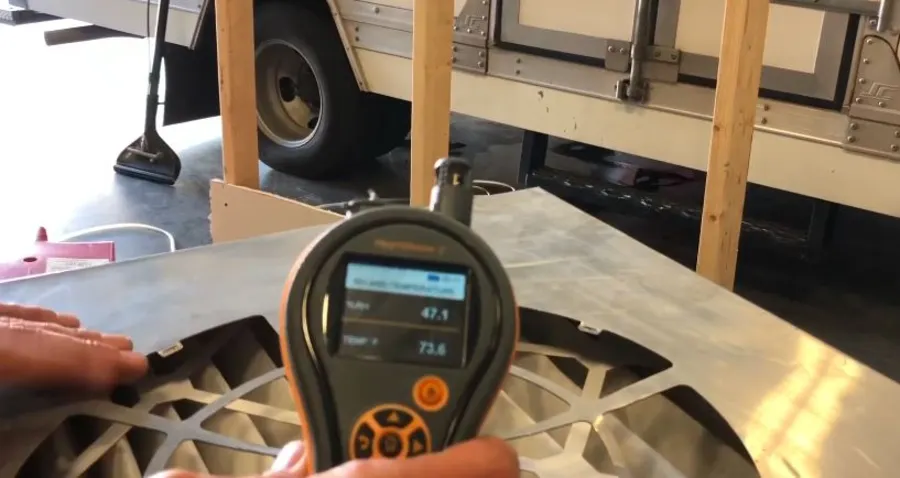
The wall feels dry. Could there still be water behind it? Yes, and this is one of the most common reasons water damage gets worse after someone thinks it’s handled. Surface dryness and structural dryness are different things. A material can feel dry to the touch while the framing, insulation, or subfloor behind it is still holding moisture. That’s exactly why professional moisture mapping (checking wall cavities, under flooring, behind baseboards with actual instruments) matters more than a visual check or a hand on the wall.
EPA guidance commonly uses a 24-to-48-hour drying target to help reduce mold risk after water exposure. That’s a genuinely useful benchmark for how fast to act. It’s not a guarantee that mold begins at exactly that hour, and it’s not a reason to panic if you’re past it. It’s a reason to get materials properly dried and verified as soon as you reasonably can.
Water Categories And Why They Matter
Under the ANSI/IICRC S500 standard, water is classified by how contaminated it is, and that classification changes both the health precautions and the actual cleanup approach.
| Category | What It Means | Common Rockwall Examples |
|---|---|---|
| Category 1 (clean) | From a sanitary source, no immediate health risk | A supply line break, a clean appliance hose failure |
| Category 2 (gray) | Contains some contamination | Washing machine or dishwasher discharge, an aquarium leak |
| Category 3 (black) | Grossly contaminated, potential health hazard | Sewage backup, floodwater from outside the home |
Category can also change over time. Clean water that sits too long, especially in warm conditions, can become more contaminated the longer it’s in contact with building materials. That’s part of why the actual condition and timeline of the water matters more than a generic rule, and why an in-person assessment beats a phone-only estimate.
Material-By-Material: What Can Actually Be Saved
This is the question people actually want answered, and the honest answer is: it depends on the material, how long it was wet, and what category of water it was.
| Material | What Usually Happens |
|---|---|
| Drywall | Can often be dried in place if there’s no obvious swelling and the seams are intact. If it stayed wet more than about 48 hours, feels soft, or shows visible growth, it typically needs closer evaluation rather than automatic replacement. |
| Insulation | Fiberglass and cellulose insulation hold water unevenly and are genuinely difficult to dry in place. In most cases, wet insulation gets replaced rather than dried. |
| Carpet & pad | The carpet itself can sometimes be saved with fast extraction. The padding underneath is a different story: it holds water like a sponge and is one of the most common things that has to come out, even when the carpet on top can stay. |
| Hardwood flooring | Can often be dried and saved if it’s addressed quickly, using specialized drying mats or equipment rather than just air movers. Cupping and buckling are signs it’s absorbed more than surface moisture, but that alone doesn’t always mean replacement. |
| Subfloor | Plywood and OSB subfloor can usually be dried in place if caught early. Prolonged exposure or visible delamination changes that. |
| Cabinets | Particleboard cabinet bases are more vulnerable than solid wood. Swelling at the base or separation at the seams is usually the sign that drying alone won’t fix it. |
Does the drywall have to come out? Not automatically. That’s a decision based on moisture readings, swelling, and how long it was wet, not a default policy of removing everything that got touched by water.
Our Water Damage Restoration Process
Emergency Call & Assessment
We find out what’s happening, where the water is coming from, and how urgent the situation is before anyone is dispatched.
Source & Category ID
Determining what kind of water this is changes the entire approach, from safety precautions to what gets saved.
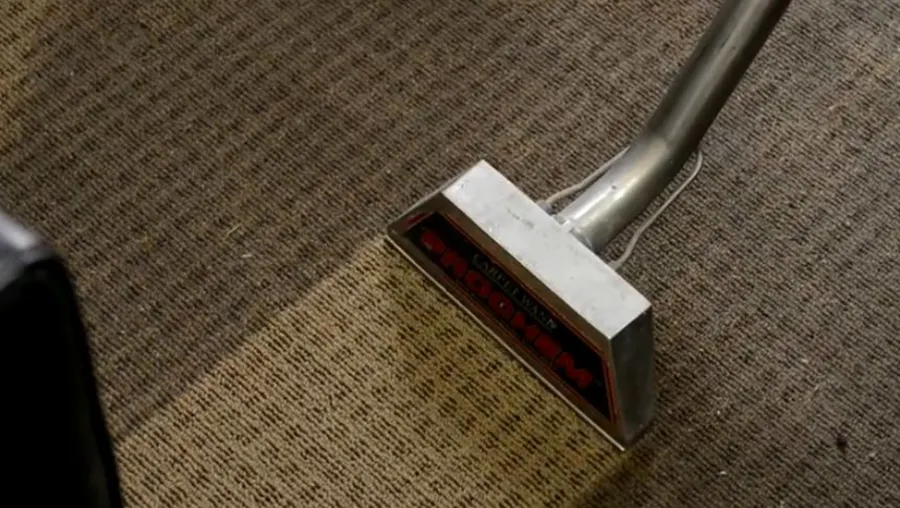
Water Extraction
Pumps and extraction equipment remove standing water. See our emergency water extraction service →
Moisture Mapping
Moisture meters check wall cavities, subfloor, and other spaces a visual inspection would miss entirely.
Structural Drying
Air movers and dehumidifiers run until moisture readings confirm materials are dry, not until a set number of days has passed.
Material Decisions
What gets dried in place versus removed is decided material by material, not a blanket rule.
Cleaning & Sanitizing
Category 2 and 3 water require different handling than a clean-water loss.
Documentation
Photos, moisture logs, and a written scope of work, for your own records and for your insurance claim.
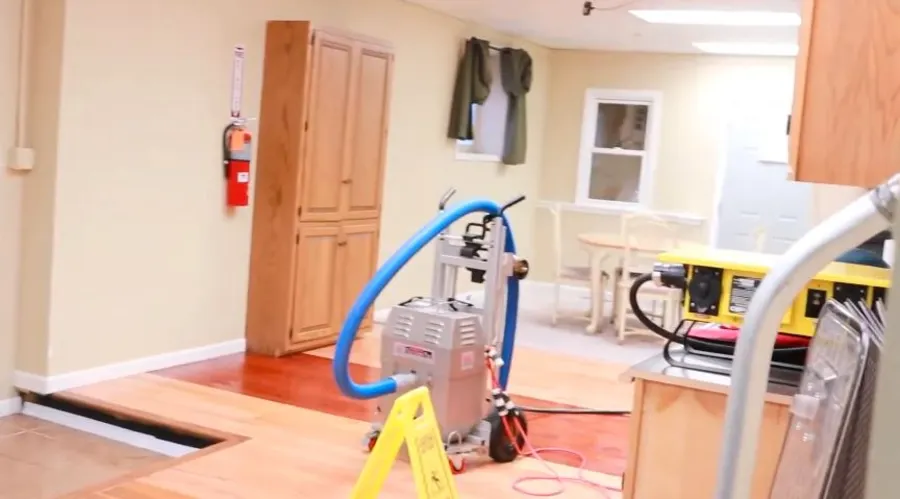
We don’t start with unnecessary demolition or a fixed equipment package. The plan is built around what the inspection actually shows.
Rockwall-Specific Water Damage Factors
Rockwall is the seat of Rockwall County, one of the fastest-growing counties in Texas, and sits along Lake Ray Hubbard. Those facts matter less for water damage than the specific, verifiable local information below.
Frozen and burst pipes are a real, documented Rockwall risk. The City of Rockwall has specifically warned residents that freezing temperatures can lead to burst pipes and costly property damage. Exposed and poorly insulated lines are the most common failure point during a hard freeze, and this is one of the most defensible local water-damage scenarios in Rockwall, not a stretch.
Flood risk in Rockwall is property-specific, not citywide. Proximity to Lake Ray Hubbard doesn’t by itself mean a given property is flood-prone. The City of Rockwall provides storm-sewer, terrain, and FEMA floodplain mapping so homeowners can check the actual risk at their specific address, rather than relying on a general assumption about living near the lake.
Emergency water and drainage issues in Rockwall have a real point of contact, and it’s not always a restoration company. A municipal water main break or a public storm-drain backup is a City of Rockwall issue, not a private plumbing problem:
| Department | Phone |
|---|---|
| Water & Wastewater | (972) 771-7730 |
| Streets & Drainage Hotline | (972) 772-6791 |
| Building Inspections | (972) 771-7709 |
| Engineering | (972) 771-7746 |
If the problem is inside your home (a burst supply line, a failed water heater, an overflowing toilet) that’s a private restoration and plumbing issue. If water is backing up from the street, pooling from a public drainage problem, or connected to a water main issue, that’s the City’s Water & Wastewater or Streets & Drainage line first.
Permits matter for repair work, not for extraction and drying. Emergency water extraction and structural drying generally don’t require a City permit. But if the repair work afterward involves plumbing, electrical, HVAC, demolition, or remodeling beyond simple drywall patching, that typically falls under the City of Rockwall’s permitting process, handled through its CityWorks system. That’s a meaningful distinction most restoration pages don’t explain: the emergency response and the permitted repair work are two different phases with two different rules.
Commercial Water Damage Restoration In Rockwall
A water loss at a business comes with problems a home doesn’t have: downtime, inventory loss, multiple stakeholders (an owner, a tenant, sometimes a property manager and more than one insurer), and pressure to reopen fast without cutting corners on drying.
Garland Restore handles commercial water damage restoration for Rockwall offices, retail spaces, restaurants, and other commercial properties, covering the same core work: extraction, moisture mapping, structural drying, and documentation, sized to what the building and the situation actually require. For the full commercial process, see our commercial water damage restoration page.
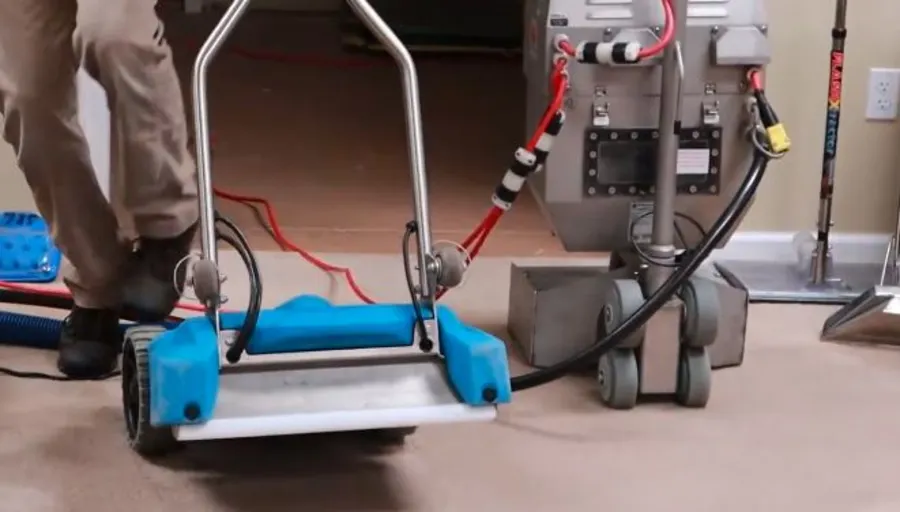
Equipment running longer than expected in a commercial space is a common source of frustration, and it’s a fair question to ask about directly: drying time should be driven by moisture readings on your specific materials, not left running on a fixed schedule. A legitimate restoration company can show you those readings, not just tell you to trust the process.
Does Insurance Cover Water Damage In Rockwall?
Often, when the cause is sudden and accidental. According to the Texas Department of Insurance, most Texas homeowners and renters policies generally cover sudden and accidental water damage, such as a burst pipe, a toilet overflow, or a broken washing machine hose, subject to your specific policy’s terms and deductible.
Gradual leaks are a different story. Long-term seepage or a slow leak that went unnoticed or unaddressed is often treated differently by insurers, and may not be covered the same way a sudden event is. This is also one of the most common sources of dispute between homeowners and insurers, since it can be genuinely hard to tell how long a leak has been happening.
Floodwater from outside your home is a separate coverage question entirely. Water entering from outside, whether from heavy rain, storm drainage, or overflow near Lake Ray Hubbard, is typically a flood insurance matter under the National Flood Insurance Program or a private flood policy, not something a standard homeowners policy covers.
We’re not adjusters and we don’t negotiate your claim for you. What we provide is the documentation that supports it: photos, moisture readings, a written scope of work, and invoices your insurer or adjuster can actually use. Coverage decisions belong to you and your insurance company. For a deeper look at Texas water damage insurance rules, see our full insurance guide.
Should I call the restoration company or the insurance company first? Either order can work, but if water is actively spreading, stopping the damage comes first. Shut off the water source if you safely can, then make both calls. The restoration company doesn’t need your insurance company’s permission to start mitigating an active loss, and most policies expect you to take reasonable steps to prevent further damage regardless of which call happens first.
What Affects Cost And Timeline
There’s no single honest number for water damage restoration, and a fixed phone quote before anyone has inspected the property is a guess, not an estimate. What actually drives cost and timeline:
- ✓The water category (clean, gray, or contaminated) and how far it spread
- ✓How long the water sat before extraction started
- ✓Which materials were affected and whether they can be dried in place versus replaced
- ✓The size of the affected area
- ✓Whether the source has been fully identified and stopped
- ✓Whether reconstruction is needed beyond drying and cleaning
A small, contained supply-line leak caught the same day is a very different job from water that sat overnight through a house. We inspect first and put the scope in writing. For general residential cost ranges by category, see our water damage restoration cost guide.
Why Rockwall Property Owners Call Garland Restore
| What We Do | Why It Matters |
|---|---|
| We document everything your insurer needs | Photos, moisture readings, and a written scope of work, not a verbal promise. |
| We explain material decisions instead of just making them | You’ll know why a specific section of drywall is being removed while another is being dried in place. |
| We tell you what depends on the inspection | Cost, timeline, and what can be saved all depend on what we actually find. We won’t promise a number before we’ve looked. |
| One direct line, one real address | (972) 526-5223 and 1802 Pleasant Valley Rd in Garland, not a call center routing you to a subcontractor. |
Learn more about Garland Restore or get in touch with questions before deciding who to call.
Frequently Asked Questions
What does water damage restoration actually include?
It starts with identifying the water source and category, extracting standing water, and mapping moisture beyond what’s visible. Drying follows with air movers and dehumidifiers until moisture readings confirm materials are dry, not on a fixed schedule. What happens after that depends on the material and how contaminated the water was.
Is the ceiling going to collapse if water is coming through a light fixture?
Water at a light fixture is a real safety concern. Turn off the power at the breaker for that circuit if you can safely reach it, avoid the area, and treat it as an emergency call rather than something to watch and wait on.
Can wet drywall be saved, or does it always need to come out?
Not always. Drywall with no obvious swelling and intact seams can often be dried in place. Drywall that stayed wet more than about 48 hours, feels soft, or shows visible growth typically needs closer evaluation.
Can my hardwood floor be saved after water damage?
Often, if it’s addressed quickly with proper drying equipment rather than just fans. Cupping is a sign of moisture absorption, but it doesn’t automatically mean the floor has to be replaced.
Why do the drying machines need to keep running for days?
Structural drying is driven by moisture readings, not a fixed timeline. Materials that feel dry on the surface can still be holding moisture inside. A legitimate restoration company should be able to show you those readings rather than just telling you it needs more time.
Should I call the restoration company or my insurance company first?
If water is actively spreading, stop the source first if it’s safe, then make both calls. Mitigating the damage doesn’t require insurance approval first, and most policies expect reasonable steps to prevent further loss regardless of order.
Is this covered by my homeowners insurance, or is it a flood claim?
Sudden, accidental water damage from inside your home is typically a homeowners insurance matter, subject to your policy. Water entering from outside your home is typically a separate flood insurance question. Long-term leaks that went unaddressed are often treated differently than sudden events.
How much does water damage restoration cost in Rockwall?
There’s no fixed number, since cost depends on the water category, how long it sat, and which materials were affected. We inspect the property first and provide a written scope rather than a phone estimate.
How do I know a restoration company isn’t removing more than necessary?
Ask for the moisture readings behind their material decisions. A legitimate scope of work explains why a specific material is being removed or dried in place, tied to actual measurements, not a blanket policy.
Does Rockwall require a permit for water damage repairs?
Emergency extraction and drying generally don’t require a permit. Repair work involving plumbing, electrical, HVAC, demolition, or larger remodeling typically does, through the City of Rockwall’s permitting process.
Do you serve businesses as well as homes in Rockwall?
Yes. Commercial water damage restoration follows the same core process, extraction, moisture mapping, structural drying, and documentation, sized to the building and situation.